🗒 Smart Planning
(Clarity, Goals step-by-step and a methodology that elevates): The TIMHELPER OS
Make your time supportive now. For more insights:
(click here)
Same as to the seven-day weekly structure, time budgeting a
contemporary adult is systematically fragmented into seven dimensions of activity:
1
☾ SLEEP&REST: The ultimate competitive advantage.
Find out more (click here)
- It is the foundation that makes everything else possible. The Rule of 56.
- Your target is 56 hours of total sleep per week. Drop below this average, and you siphon energy directly from your highest-value life categories.
- The Definition of Rest
- True sleep includes your “nap bath” and the wind-down window: laying down with eyes closed, zero screens, and a mind cleared of the day. The optimal deep-rest block is hardcoded from 22:00 to 06:00.
- The Trap
- Most people sacrifice sleep for everyone else—kids, partners, endless chores—or mistakenly view rest as a weakness. This is a critical tactical error.
- The Cost of Deficit
- Stop treating sleep as a luxury; track it as a performance metric. When you get less than 7 hours of sleep, you suffer immediate penalties:
- A 30 percent drop in testosterone. A 40 percent decline in decision-making quality.
A dramatic spike in irritation and anger.
The Separation of Categories - Worrying or planning in bed is not sleep. That is Waste Worry. If you are lying awake spinning your wheels, get out of bed immediately. Protect your sleep environment to guarantee your patience, focus, and peak performance tomorrow.
2
✎ PROFESSIONAL: The focus framework.
Find out more (click here)
- Distinguish yourself doing real progress how it matters.
- · Deep Work: High-leverage, cognitively demanding tasks that move the needle (e.g., client strategy, side hustle creation, interview prep).
· Shallow Work: Necessary but low-cognitive logistical maintenance (e.g., clearing email inbox, filling out admin forms, scheduling).
Invisible Labor: The emotional tax of professional life (e.g., maintaining team morale, remembering dates, unpaid organizing, managing office politics). The quality rule (No split attention) - · True depth requires radical singular focus. If attention is fractured, the value drops to zero.
- · Context Switching: If you are working while parenting, or mixing casual socializing with networking, count it as half-value.
· Serial Monotasking: If you attempt to run two categories simultaneously, neither achieves quality. Drop one.
The central question is if I am investing my peak biological energy into my highest-leverage deep work, or if I am giving my primary assets to everyone else and leaving the leftovers for myself? - Track your time across four distinct quadrants to see where your energy actually goes:
- · Peak-Energy Deep Work (leverage zone) High-leverage career building or client work executed during your hours of highest focus and clarity.
· Low-Energy Shallow Work (maintenance zone) Admin tasks, routine emails, and scheduling handled intentionally when your cognitive battery is running low.
· The Accommodation Trap (depletion zone) Performing deep work or emotional labor at low energy because you used your best hours to accommodate other people’s schedules.
· Invisible Emotional Labor (shadow zone) The unmeasured emotional tax—remembering dates, keeping team morale high, and unpaid organizing. Split this into focused strategy vs. shallow people-pleasing.
3
👣 PERSONAL: The ultimate investment (the future you).
Find out more (click here)
- Your future self is shaped by how you invest your scarcest asset: the next 60 minutes. True self-investment is a deliberate, scheduled choice that yields compounding returns over time. It is not an afterthought; it is the foundation.
- True Maintenance vs. High-Yield Inputs
- Physical & Mental Vitality: Movement, nutritious cooking, medical check-ups, and therapy.
- Intellectual & Creative Expansion: Reading, structured learning, journaling, and building something purely for the joy of creation.
- Intentional solitude: Solo-Hobbies that recharge your battery rather than drain it.
- The Performance Trap & The Selfishness Myth
- Most people suffer from two distinct cognitive distortions regarding self-care:
- · The People-Pleaser Fallacy: You place your own maintenance at the absolute bottom of the priority list, treating it as a luxury instead of a necessity.
- · The Performance Trap: You exercise exclusively to look good rather than to feel good, turning self-care into an external performance for others.
- Shifting from numbing to recharge, we must strictly differentiate between high-yield maintenance and low-yield distraction:
- · High-Yield Maintenance: Scheduled actions that actively restore your mind and body.
- · The Transition Zone: Necessary life upkeep, such as shopping for essentials.
- · The Net Waste Zone: Doomscrolling on the couch masked as relaxation, or watching screens to numb your mind. This is not self-care; it is avoidance.
- A good maintenance mandate is taking time for yourself. It is operational maintenance. You cannot pour from an empty cup, and you cannot run a high-performance engine without scheduled downtime. Drop the guilt. Before you commit your next hour to an activity, filter it through a single, powerful question:
- Will my future self in one year thank me for this hour?
4
··· SOCIAL: Designing a high contribution life.
Find out more (click here)
- We treat our time like an open buffet, yet we leave the table starved. We manage fifteen superficial connections, mistake chronic exhaustion for a productive life, and proudly wear the badge of being busy. Meanwhile, the relationships that actually nourish us get exactly zero hours of our month.
- It is time to stop maintaining and start connecting.
- True Social Time: The High-Value Zones
- True social connection is an investment that yields energy, not a tax that depletes it. High-value social time includes intentional community gatherings, meaningful family check-ins, and networking that expands your horizons. Most importantly, it means prioritizing the friends who lift you up over the ones you keep around simply out of habit.
- Remember the Golden Rule of relational leverage: Two hours of deep connection will always outperform ten hours of shallow interaction. Relationships are allowed to have seasons. Let them pass.
- The Counterfeits: What to eliminate
- If an interaction leaves you feeling drained, it is not social time. It is emotional labor.
- Protect your calendar from the energy thieves:
- · The obligatory work small talk that leads nowhere.
· The digital voyeurism of scrolling through acquaintances’ stories.
· The environments where you are required to listen but are never truly heard.
If you leave an environment depleted, reclassify it immediately. It belongs in one of two categories: Professional Duty or Pure Waste. - The Ultimate Relational Litmus Test
- To design the optimal balance for your life, run every interaction through a strict, two-part filter:
- · The Visibility Check: Did I feel genuinely seen, or was I just being useful? If you only felt useful, it was a transaction, not a connection.
· The Net-Energy Equation: Was the outcome of this interaction net-positive or net-negative?
Stop managing relational volume. Start auditing relational value. Choosing quality over quantity may become a solution, ruthlessly cut the noise, and protect your peace.
5
♡ INTIMATE: High-Yield connection (the deep inflow).
Find out more (click here)
- This is time spent in intentional silence or profound, undistracted connection. It is the practice of filling your own tank by sharing an experience where you are simultaneously giving and receiving.
- Deep, unhurried conversations.
Physical intimacy, cuddling, and touch.
Shared home dinners without screens.
True relaxation at home where kids play and adults co-regulate.
Focus: A low-stimulation, high-presence environment where the main goal is simply “being” together.
The diagnostic problem: The “always on” deficit - You are trapped in the role of the ultimate provider. You are constantly on the hook for cooking, physical care, and managing everyone else’s emotional climate. You are actively giving, but your internal bank account is receiving zero deposits.
- Alternatively, you are suffering from “Ghost presence”—you are physically in the room, but mentally miles away. Your partner and your children can instantly feel this energetic absence.
- Do not mistake administrative labor or proximity for true intimacy. The following activities drain your battery without building a bridge:
- Texting your partner throughout the day about tasks.
Arguing over chore equity (this belongs under Personal Admin).
Sitting side-by-side on the couch while staring at individual phones.
The silent mental load of planning, bills, and logistics.
Forcing physical intimacy while carrying a heavy layer of exhaustion and resentment.
These activities do not count toward your connection baseline. - The daily audit: The 50/50 Rule. At the end of each day, perform a quick relational audit:
- Did I actually receive meaningful energy today, or did I only give it away?
Is my relational account moving closer to a healthy 50/50 equilibrium?
Was I fully present in the room, or was I just a ghost?
The rule of presence: If you were not mentally there, the time does not count. Connection requires full residency.
6
≈ TRANSITION: The friction of the Invisible.
Find out more (click here)
- We often categorise our lives neatly into Career, Family, and Personal. But we completely ignore the glue that holds them together: Transition Blocks.
- Transition Blocks are the interstitial tasks of daily life. They include commuting, packing bags, folding laundry, waiting in lines, showering, getting ready, and transferring from point A to point B.
- The Problem: The 70% Tax
- When left untracked, transitions transform into an invisible tax. If you find yourself carrying too much of these transitional logistics, you aren’t just doing tasks—you are carrying a massive mental load of planning, admin, and uncredited labor. It sits right at the exhausting intersection of Professional and Transition work. But here is the secret weapon of time management: Intent changes the category.
- The Rule of Intent
- A task is only neutral or draining if it lacks intentionality. Intent completely changes the category:
- Cleaning as a forced chore = Draining Transition
Cleaning as a sensory grounding exercise = Personal Growth
Commuting with an educational podcast = Intentional Self-Care
Cleaning with your kids turned into a game = Intimate Connection
The framework for reclaiming your time is that nothing neutral should be allowed to drain you. Before you accept a transition block, run it through these three questions: - Is this mine to carry? (Ownership)
Can this be delegated or rebalanced? (Partnership)
Can this be merged or flipped into a higher-value category? (Intent) - By making the invisible visible to your partner or family, you stop letting life pile up in the form of silent resentment.
7
⌒ WASTE: The zone of unconscious drift (not chosen).
Find out more (click here)
- This is “accidental time.” It feels like a choice, but it is actually a default reaction to friction, exhaustion, or emotional avoidance. It doesn’t restore you; it drains your remaining reserves.
- The Digital Void: Doom-scrolling, random videos, re-watching repetitive news loops.
- The Numbing Agents: Reaching for bad habits (porn, drugs, etc) or passive consumption.
- The Psychological Loops: Worry spirals, overthinking to delay an uncomfortable action.
- The Boundary Failes: Saying “yes” to someone else when your entire being means “no.”
- Instead: the zone of conscious Intention (Chosen)
- This is “designated time.” It is active, intentional, and guilt-free. Even low-energy entertainment belongs here if it was scheduled as a reward or a boundary.
- Planned Media: Setting aside two hours for a specific movie or a video game you love.
- Celebration Distraction: Spending 15 minutes on social media after a deep-work block.
- High-Value Solitude: Choosing a personal hobby, writing, or being with your thoughts.
- The Mid-Collapse Diagnostic
- The next time you find yourself stuck in Waste time ask yourself:
- “Did I choose this on purpose? If I just collapsed into this, what did my system actually need?”
- Rest & Sleep? (Am I exhausted and trying to bypass sleep with cheap dopamine?)
- Intimate Connection? (Am I feeling lonely, isolated, or misunderstood?)
- Personal Autonomy? (Am I starved for control over my day because my morning and afternoon belonged entirely to other people?)The Shift: Stop calling your exhaustion a character flaw. Label your drift honestly, identify the true deficit, and choose your recovery on purpose.
- The Shift: Stop calling your exhaustion a character flaw. Label your drift honestly, identify the true deficit, and choose your recovery on purpose.
Find out more about the Timhelper OS
🌟 Astrology and Cycles
(Connection with cosmos and nature) · From Sky and Moon perspective.
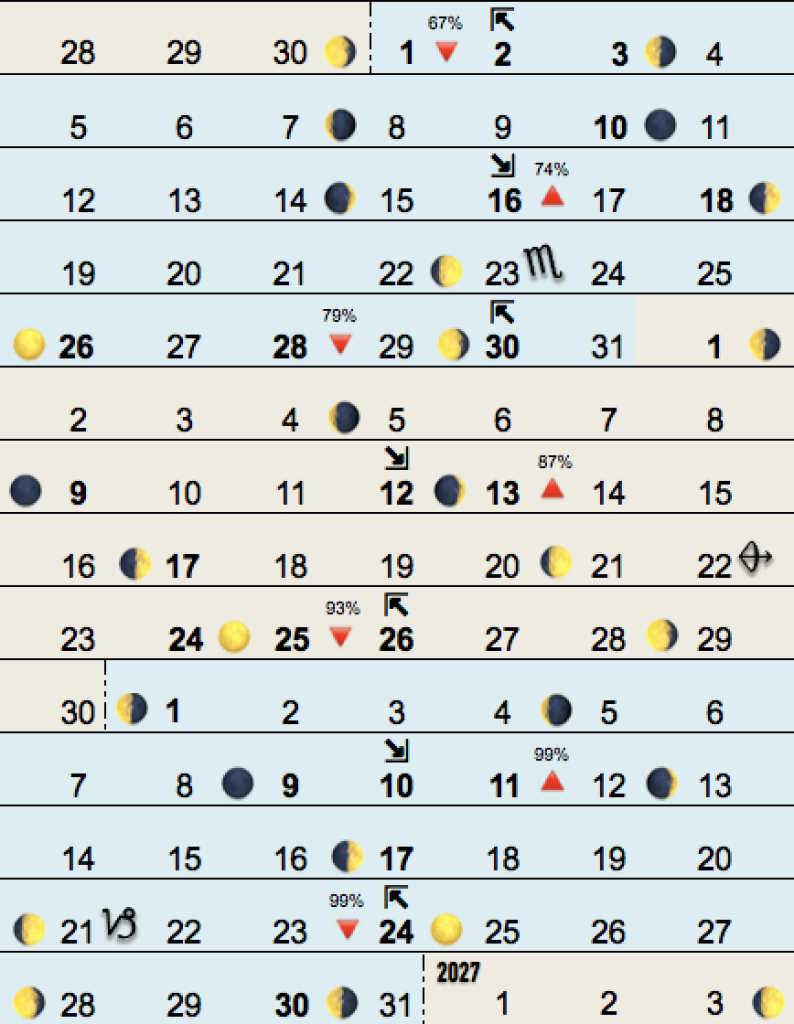
Always 3 the FREE monthly ics. files ready to
download and release in your calendar (the most accurate moon and zodiac phases):